
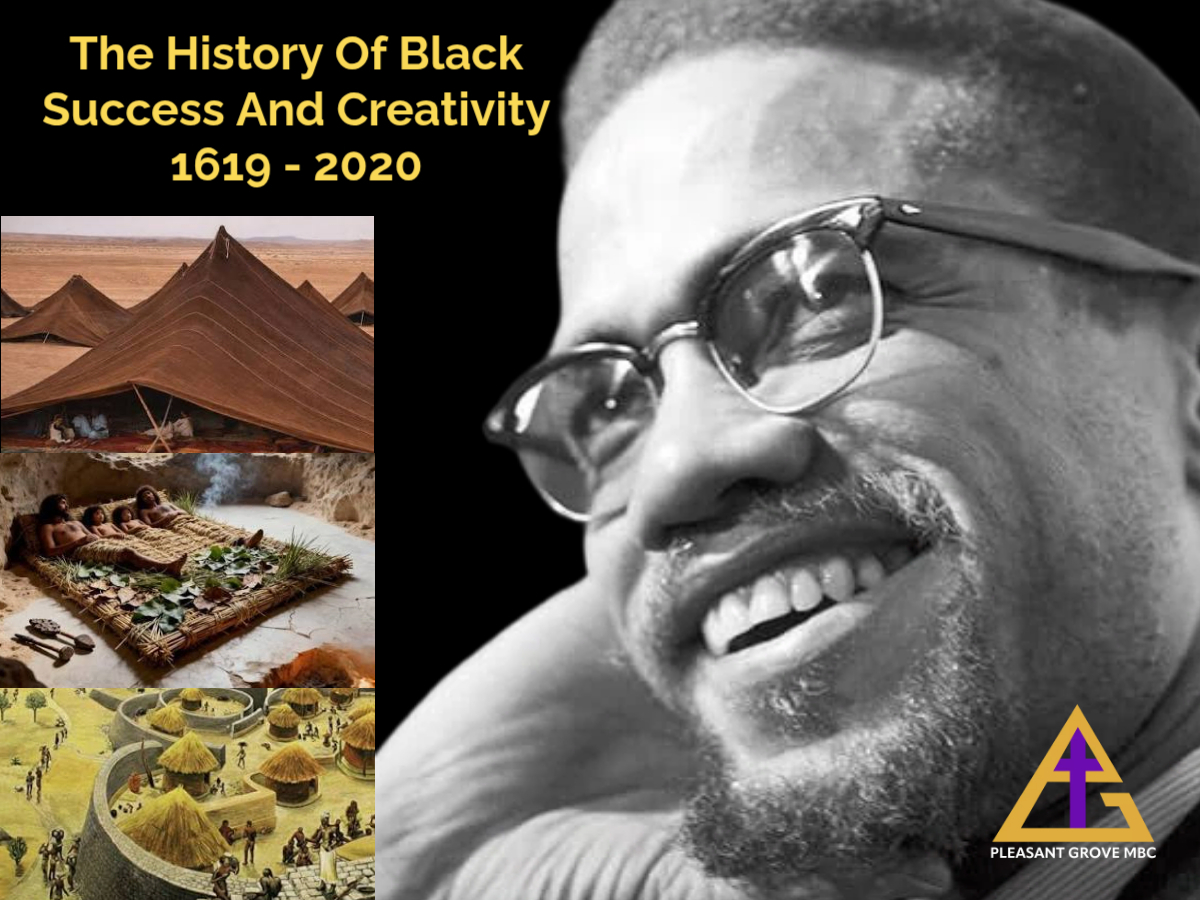
A September Celebration of Courage, Innovation, Faith, Freedom, and Achievement
September Black History & Heritage Feature
September 2026 Blog Series
Black history is more than a story of struggle.
It is a story of survival, creativity, faith, achievement, innovation, leadership, resistance, family, entrepreneurship, and an unwavering pursuit of freedom.
From the arrival of enslaved Africans in English North America in 1619 through the extraordinary achievements of Black Americans in the 21st century, generations of people of African descent have helped shape the United States and the world.
For the month of September, we recognize The History of Black Success and Creativity: 1619–2020.
This history includes painful chapters that should never be forgotten. But Black history cannot be defined only by slavery, segregation, discrimination, and oppression. It must also include the people who built businesses, established churches, created inventions, advanced medicine, produced art and music, defended the nation, organized communities, educated generations, fought for voting rights, and expanded America’s understanding of freedom.
Black history is American history.
And one of the most influential voices in that history was Malcolm X.
Malcolm X: Transformation, Courage and Black Self-Determination
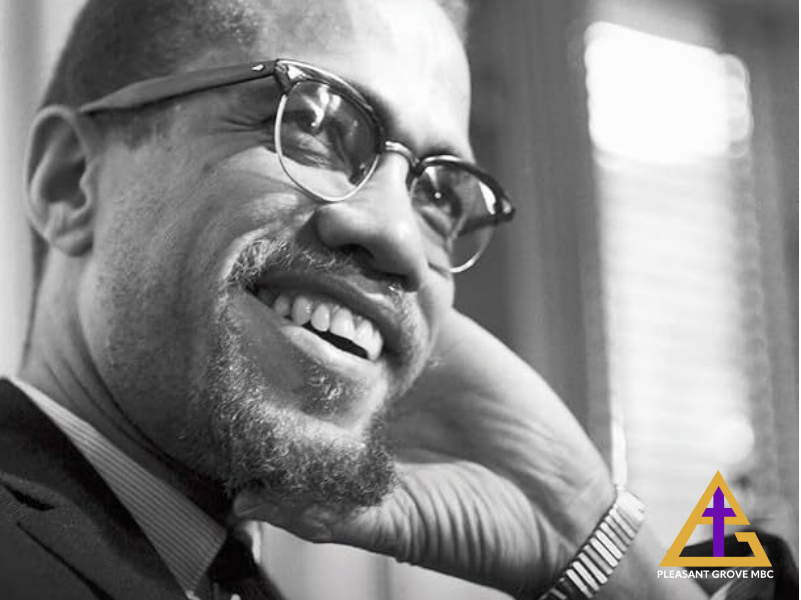
Malcolm X was born Malcolm Little on May 19, 1925, in Omaha, Nebraska. His father, Earl Little, was a Baptist minister and supporter of Marcus Garvey’s Black nationalist movement.
Malcolm’s childhood was marked by instability and tragedy. His father died while Malcolm was still a child, and his mother, Louise Little, was later institutionalized. Malcolm and his siblings were separated, and he spent part of his youth living in foster homes.
As a young man, Malcolm eventually moved to Boston and later became immersed in the street life of Harlem. His activities included gambling, hustling, burglary and other crimes.
His life appeared to be headed toward destruction.
Then came prison.
Prison and Conversion
In 1946, Malcolm was imprisoned on burglary-related charges. His years behind bars became one of the great turning points of his life.
Instead of allowing prison to become the end of his story, Malcolm used the experience to educate himself.
He read extensively, developed his ability to debate and communicate, studied history and became increasingly aware of racial injustice in America.
During this period, Malcolm was introduced to the teachings of the Nation of Islam (NOI).
He eventually stopped using the surname “Little,” describing it as a name inherited from slavery, and adopted Malcolm X—with the “X” symbolizing the African family name that had been lost through slavery.
When Malcolm was released from prison in 1952, he possessed something he had not possessed when he entered:
A mission.
The Nation of Islam Years
Malcolm X quickly became one of the Nation of Islam’s most recognizable ministers and public spokesmen.
His intelligence, commanding presence, discipline and extraordinary speaking ability attracted national attention.
Malcolm spoke unapologetically about racism, economic inequality, police brutality, Black identity and the need for Black communities to control their institutions and economic futures.
He challenged Black Americans to develop pride in themselves.
He advocated discipline.
He emphasized education.
He promoted economic independence.
And he insisted that Black people had the right to defend their dignity and humanity.
His rhetoric often differed sharply from the nonviolent integrationist approach associated with leaders such as Dr. Martin Luther King Jr., making Malcolm one of the most debated figures of the Civil Rights era.
Yet his influence was undeniable.
The Break and Transformation
By 1964, Malcolm X had separated from the Nation of Islam.
That same year, another transformative experience occurred.
He traveled to Mecca to complete the Hajj, the Islamic pilgrimage.
There, Malcolm encountered Muslims of different races and nationalities worshiping together. The experience caused him to reconsider some of his earlier views regarding race and racial separation.
His thinking continued to evolve.
He increasingly placed the Black American freedom struggle within a larger international movement for human rights.
Malcolm also traveled through Africa and the Middle East and developed relationships with international leaders and activists.
His message was changing.
His commitment to Black freedom remained powerful, but his understanding of how that freedom might be achieved had broadened.
February 21, 1965: The Assassination of Malcolm X
On February 21, 1965, Malcolm X was preparing to address an audience at the Audubon Ballroom in New York City when gunmen opened fire.
He was killed at only 39 years old.
His assassination ended his life, but it did not silence his influence.
The circumstances surrounding the assassination and the responsibility of individuals associated with the Nation of Islam have remained subjects of historical examination and controversy.
Malcolm’s ideas continued spreading through speeches, recordings, books and subsequent generations of activists.
His story became even more influential following the publication of The Autobiography of Malcolm X, written with Alex Haley.
Malcolm X’s influence can be seen in later Black Power movements, Black nationalism, international human-rights advocacy and continuing conversations about racial justice, economic independence and Black identity.
His life also demonstrates something deeply human:
People can change.
Malcolm’s journey took him from a troubled childhood to the streets, from the streets to prison, from prison to ministry, and from national leadership to international human-rights advocacy.
September 15, 1963: Four Little Girls and a Church That Changed America
September also carries one of the most painful anniversaries of the Civil Rights Movement.
On Sunday morning, September 15, 1963, a bomb exploded at 16th Street Baptist Church in Birmingham, Alabama.
The church was much more than a place of Sunday worship. It had become an important gathering place for the Civil Rights Movement.
The bombing killed four Black girls:
Addie Mae Collins — 14
Cynthia Wesley — 14
Carole Robertson — 14
Denise McNair — 11
More than 20 other people were injured.
The FBI identifies Ku Klux Klan members Robert Chambliss, Bobby Frank Cherry, Herman Frank Cash and Thomas Blanton Jr. as suspects in the bombing. Prosecutions stretched across decades: Chambliss was convicted in 1977, while Blanton and Cherry were convicted in the 2000s. Cash died before he could be tried.
The attack horrified the nation.
But the bombing also demonstrated why Black churches had become such important institutions in the struggle for equality.
For generations, the Black church had served as far more than a place of worship.
It was a school.
A meeting hall.
A community center.
A political organizing space.
A source of economic cooperation.
And during the Civil Rights Movement, churches became places where ordinary people organized extraordinary change.
The bombing attempted to create terror.
Instead, the memory of those four girls became part of America’s continuing demand for justice.
August 6, 1965: The Voting Rights Act
Less than two years after the Birmingham church bombing, another landmark moment occurred.
On August 6, 1965, President Lyndon B. Johnson signed the Voting Rights Act of 1965 into law.
The Fifteenth Amendment had been ratified nearly a century earlier, declaring that voting rights could not be denied on account of race, color or previous condition of servitude.
Yet legal guarantees on paper had not created equality at the ballot box.
Across parts of the South, Black Americans encountered literacy tests, intimidation, bureaucratic obstacles, economic retaliation and violence when attempting to register and vote.
The Voting Rights Act attacked many of those discriminatory practices.
Its impact was dramatic.
The National Archives reports that approximately 250,000 new Black voters were registered by the end of 1965, with federal examiners responsible for roughly one-third of those registrations.
Voting was about more than selecting political leaders.
It represented citizenship.
Voice.
Representation.
Accountability.
And the ability of communities to participate in decisions affecting their schools, neighborhoods, businesses, public services and futures.
Democracy and the Black Freedom Struggle
The Black freedom struggle helped force America to confront a fundamental question:
Would the promises of American democracy apply to everyone?
Generations of Black Americans demanded that the country honor its own constitutional principles.
They organized.
They marched.
They registered voters.
They challenged discriminatory laws.
They created institutions.
They worshiped together.
They built businesses.
They served in America’s armed forces.
They entered classrooms from which previous generations had been excluded.
They ran for public office.
They became judges, doctors, educators, scientists, engineers and entrepreneurs.
The pursuit of freedom was not simply a demand to participate in America.
It was a demand that America become more faithful to the democratic ideals it proclaimed.
For many Black Americans, that work was also deeply connected to faith. Black churches frequently framed struggles for justice, compassion, dignity and care for vulnerable people through Christian teachings about loving one’s neighbor and seeking justice.
Black Creativity Began Long Before 1619
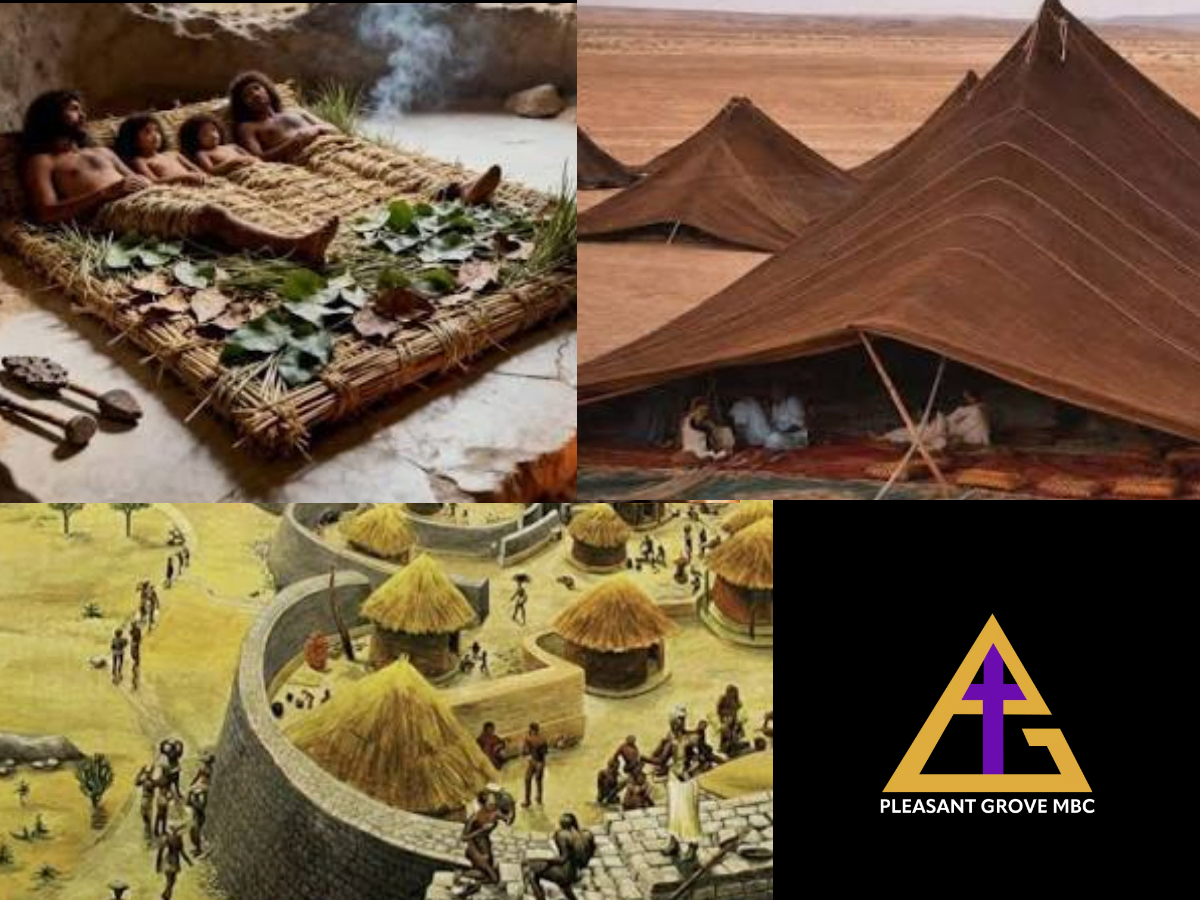
To understand Black history fully, we must look beyond the shores of America.
African history did not begin with slavery.
Long before Europeans established colonies in the Americas, African civilizations had developed sophisticated systems of agriculture, architecture, trade, scholarship, medicine, government and art.
Archaeological evidence also demonstrates the ingenuity of early African communities.
At Border Cave in South Africa, researchers have found evidence of plant bedding dating back approximately 200,000 years, including the use of plant material associated with insect-repelling properties.
Such discoveries remind us that human beings have been creatively adapting their environments for thousands of generations.
African societies would later produce magnificent cities, universities, kingdoms and trading networks.
From Egypt and Nubia to Mali, Songhai, Great Zimbabwe and numerous other civilizations, Africa’s history demonstrates enormous cultural and technological diversity.
The story of Black creativity therefore does not begin with enslavement.
It reaches deep into human history itself.
Black American Innovation
After emancipation, Black Americans faced extraordinary barriers to education, employment, financing and business ownership.
Yet innovation continued.
Consider just a few examples.
Granville T. Woods — Railway Communication
Often called the “Black Edison,” Granville T. Woods became an important inventor in electrical and railway technology.
Among his innovations was a system associated with railway telegraph communications that helped moving trains communicate more effectively.
His inventions contributed to the development of safer and more efficient transportation technology.
John Lee Love — Pencil Sharpener
In 1897, John Lee Love received a U.S. patent for an improved portable pencil sharpener.
It was a simple idea with practical usefulness—the kind of innovation that demonstrates how creativity can improve everyday life.
Anna M. Mangin — Pastry Fork
Black women also contributed to America’s history of invention.
Anna M. Mangin received a patent in 1892 for a pastry fork designed to assist with mixing ingredients used in pastry preparation.
Her invention is an important reminder that Black women participated in America’s culture of invention despite facing the combined barriers of racial and gender discrimination.
Dr. Daniel Hale Williams: A Medical Pioneer
In 1893, physician Dr. Daniel Hale Williams performed one of the pioneering successful operations involving the human heart.
His patient had suffered a stab wound, and Williams successfully repaired damage involving the pericardium surrounding the heart. The patient survived.
Williams’s achievement was remarkable during an era before modern cardiac surgery.
But his contributions went beyond the operating room.
Williams also helped establish Provident Hospital in Chicago, an institution known for providing opportunities for Black physicians and nurses during a period when racial discrimination severely limited access to medical training and hospital positions.
His life represented both medical innovation and institution building.
That combination would become a recurring theme in Black American history:
When doors were closed, Black Americans often built new doors.
From 1619 to 2020: More Than Four Centuries of Contribution
By 2020, the descendants of enslaved Africans and generations of Black Americans had helped transform virtually every part of American culture.
Black Americans helped shape:
Medicine.
Science.
Business.
Agriculture.
Education.
Music.
Sports.
Technology.
Religion.
Literature.
Fashion.
Military service.
Politics.
Civil rights.
Entrepreneurship.
Entertainment.
The world heard Black creativity through spirituals, gospel, blues, jazz, rock and roll, R&B and hip-hop.
It witnessed Black excellence in laboratories, hospitals, universities and courtrooms.
It experienced Black entrepreneurship through businesses built even when access to traditional financing was limited.
And it witnessed Black political leadership grow from communities once systematically denied access to the ballot box.
The journey was never easy.
But the creativity never stopped.
Our History Is Also About Success
When Black history is taught only through slavery and suffering, generations can leave with an incomplete picture.
We must remember slavery.
We must remember Jim Crow.
We must remember racial violence.
We must remember the four girls killed at 16th Street Baptist Church.
We must remember those who were denied the ballot.
But remembrance should never stop there.
We should also remember the inventors.
The entrepreneurs.
The doctors.
The educators.
The pastors.
The musicians.
The soldiers.
The mothers and fathers.
The organizers.
The builders.
The scientists.
The writers.
The business owners.
The ordinary families who survived extraordinary circumstances and still created opportunities for the next generation.
The Story Continues
From 1619 to 2020, the Black American experience tells an extraordinary story.
It contains injustice, but also resistance.
Pain, but also perseverance.
Oppression, but also achievement.
Tragedy, but also triumph.
And throughout that history runs an unmistakable current of creativity.
Malcolm X transformed himself through education.
Civil-rights activists transformed communities through organization.
Black inventors transformed everyday technology.
Black physicians transformed medicine.
Black churches transformed faith into community action.
Black voters transformed political participation.
And countless Black families transformed sacrifice into opportunity for the generations following them.
That is why Black history must never be reduced to what happened to Black people.
We must also teach what Black people created, built, discovered, defended, organized, invented and achieved.
As we recognize The History of Black Success and Creativity throughout September, let us honor those who came before us by continuing their work.
Learn the history.
Teach the children.
Support Black businesses.
Celebrate Black creativity.
Preserve Black institutions.
Honor our elders.
Encourage our young people.
Build something that will outlive us.
Because the greatest tribute we can give those who opened doors before us is to walk through those doors—and then hold them open for the generation coming behind us.
The history continues.
The creativity continues.
The success continues.
And the next chapter is ours to write.
THE HISTORY OF BLACK SUCCESS AND CREATIVITY | 1619–2020
Remember the past. Celebrate the progress. Educate the present. Build the future.
Research: Sis. Betty Bell
Copywriting & Graphics: Carlfred Giles